
Thermal silicone pads are often treated like a standard consumable, but custom industrial projects usually need more detail before a supplier can review feasibility. Thickness, hardness, compression, drawing shape and validation target all affect the material route.
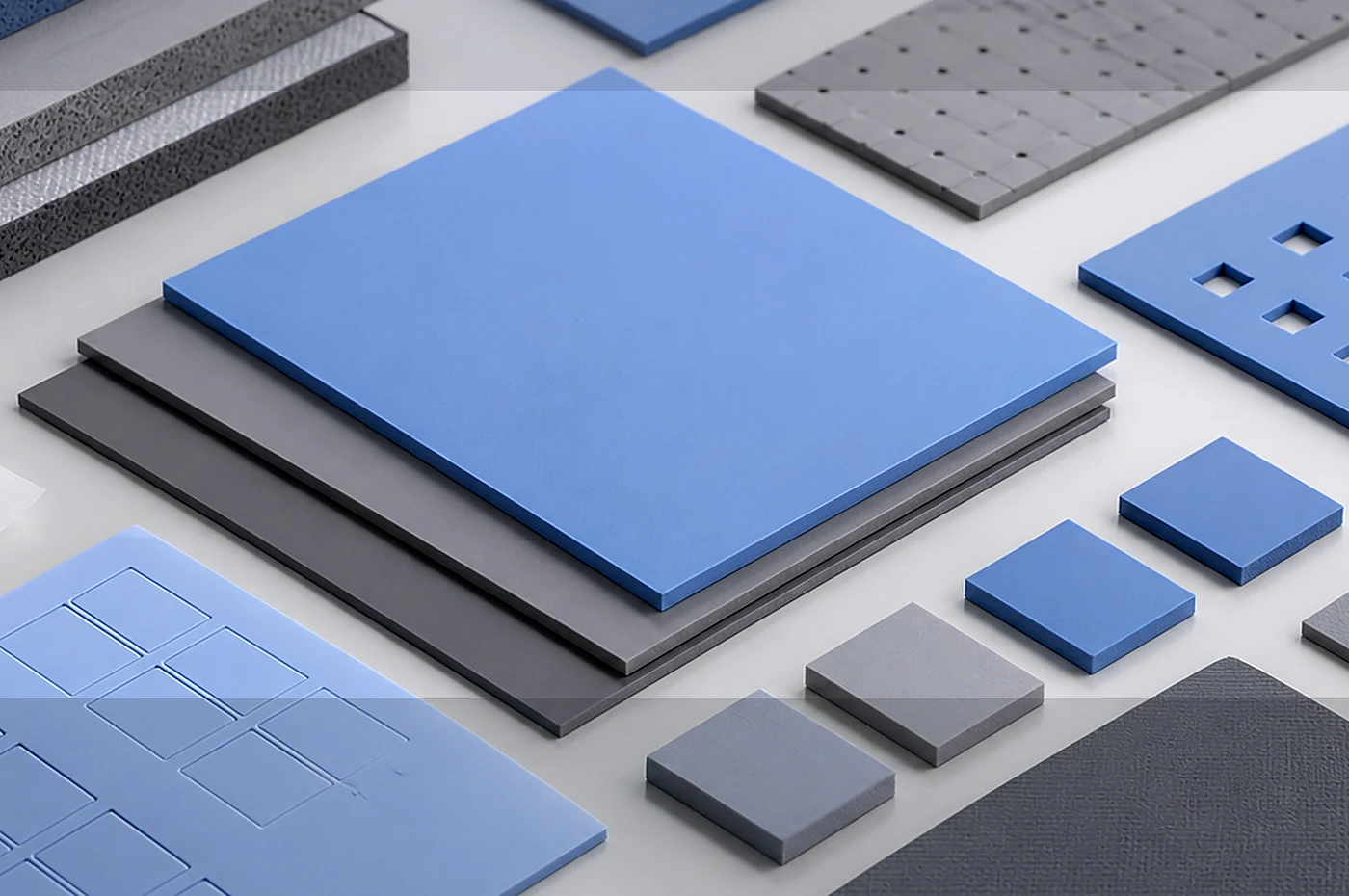
This guide supports buyers preparing an inquiry for Thermal Pads. If the design needs to fill a larger or uneven gap, also review Gap Fillers.
1. Thickness and geometry
State nominal thickness, tolerance target and finished shape. If the pad is die-cut, note holes, slots, adhesive areas, release liner requirements and any edge constraints. If no drawing exists, sample photos with dimensions are still useful for early discussion.
2. Hardness and handling
Hardness affects conformability, installation feel and compression behavior. Buyers should describe whether the pad must be soft enough for uneven surfaces, firm enough for handling, or stable enough for repeated assembly operations.
3. Thermal target and assembly condition
A thermal target is only meaningful when tied to an assembly condition. Share heat source, mating surface, pressure or compression range, contact area and expected validation method. Forvard Tech can discuss thermal goals, but does not treat a website phrase as a guaranteed final value.
4. Compression and stack-up
- Initial gap or stack-up height.
- Expected assembled thickness or compression percentage.
- Whether the pad must absorb tolerance variation.
- Whether the application includes vibration, heat cycling or long service conditions.
5. Drawings, samples and quantity stage
A prototype inquiry can start with limited information, but production review usually needs a drawing, target dimensions, quantity stage and destination country or region. Sample parts or photos help clarify whether a pad, sheet, molded part or gap filler is the better path.
RFQ review is project-specific. Pricing, timing, availability, document scope and final performance details are confirmed only after project review.
Compliance and document notes
If the project mentions food-contact, flame, RoHS, REACH, UL, FDA, LFGB or other documentation, the request is checked by material, batch, target market and project use. Review the Project Information Notice for the public boundary.