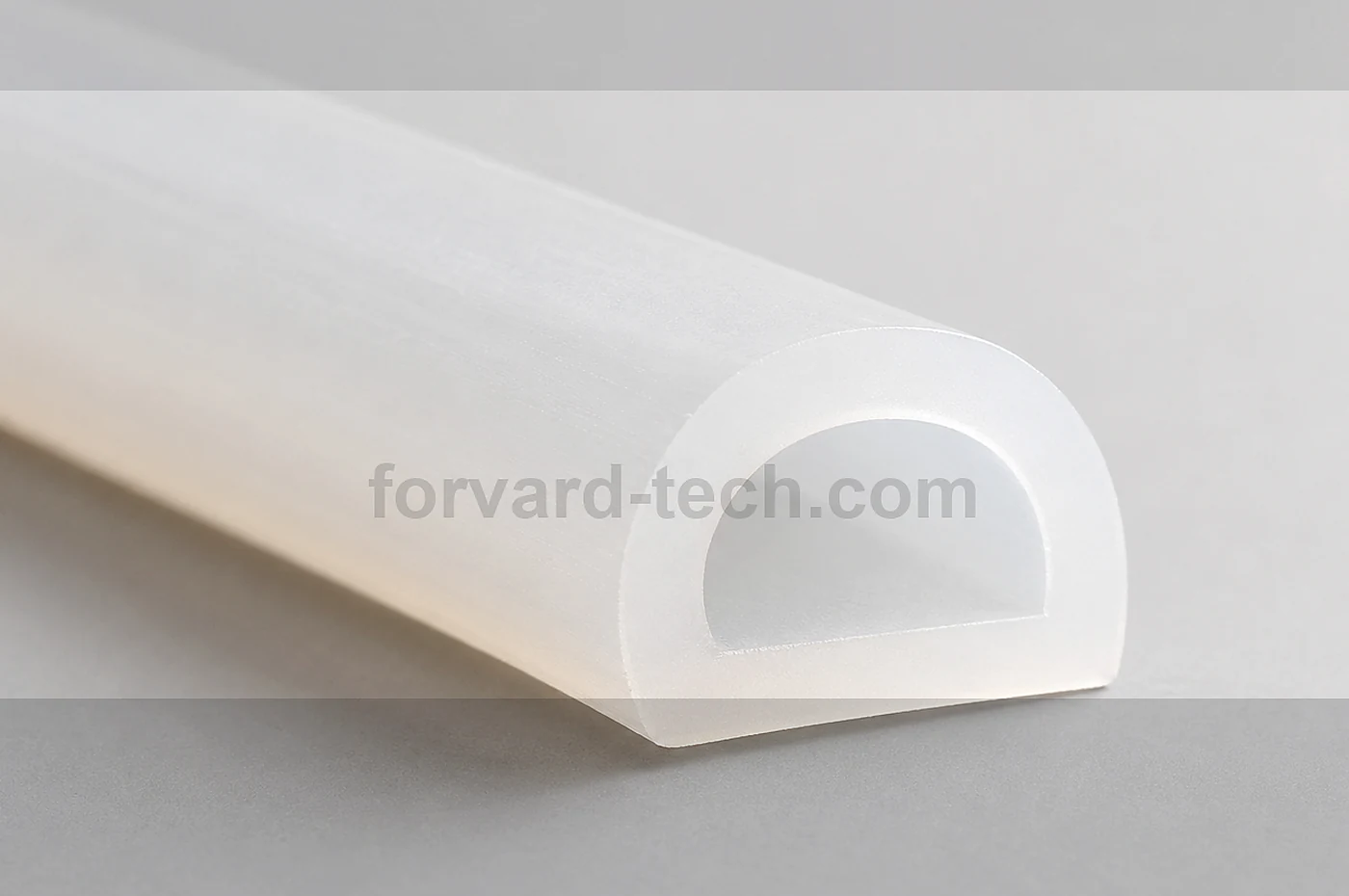
Silicone gasket product visual

Silicone Gaskets for Custom Sealing Applications

A10 · Part type

Silicone Gaskets for Custom Sealing Applications

Custom silicone gasket review for sealing geometry, compression behavior, media contact and inspection scope.

Silicone Gaskets B2B product hero image
B2B product image
Silicone Gaskets product geometry visual
Product detail
Silicone Gaskets real inspection context
Real inspection context

Typical project fit

Specifications, documents and acceptance are confirmed by project details rather than by page content alone.

Fit
  • Custom gaskets and sealing profiles
  • Equipment doors, covers and enclosure sealing
  • Sample-based and drawing-based projects
Silicone Gaskets product geometry visual
Product geometry

Geometry review

Shape, dimensions, tolerance and application conditions are reviewed before sampling or production.

Silicone Gaskets real processing equipment context
Real processing context

Production context

Real facility photos support capability proof without making fixed stock, lead-time or performance promises.

project details to prepare

  • Profile drawing or sample photos
  • Compression and sealing environment
  • Material, color and quantity needs
  • Shipping country or region
  • industrial application note

Process Routes

Silicone gaskets can follow several manufacturing routes. Solid silicone sheet can be calendered and then die-cut or waterjet-cut for flat gaskets. Compression molding is used when the gasket needs formed lips, raised sections, grooves or repeatable three-dimensional geometry. Sponge and foam silicone routes are selected when compression load and sealing recovery matter more than solid-section strength.

The density route affects sealing behavior. Closed-cell sponge or foam is often reviewed when the sealing environment needs water or dust resistance and controlled compression. Open-cell structures are considered differently because media can travel through the cell network. During engineering review we look at mating surface, compression target, media contact, gasket geometry, installation method and whether the part is supplied as flat, molded, joined or profile-based.

Testing Boundaries

Testing boundaries for silicone gaskets usually include compression set by ASTM D395, leak-rate or sealing checks when the customer defines the fixture, media immersion using the customer’s specified oil or chemical, and thermal cycling for environmental durability. Dimensional inspection is also important for holes, tabs, sealing lips and mating surface alignment.

A gasket test result depends on compression condition, material route, contact media, aging plan and fixture. We can help define a test plan from the drawing, but we do not state a universal sealing result for every gasket. All testing is project-specific and confirmed during drawing review. Not a blanket capability guarantee. See our Testing and Quality Control page for the broader review workflow.

Application Fit

Silicone gaskets fit equipment that needs compliant sealing under repeated assembly or environmental exposure. Typical civilian industrial uses include outdoor cabinet seals for ingress protection design, food equipment door seals, cleanroom equipment sealing, chemical process pipe flange gaskets, electronics enclosures and access panels.

If the sealing part is a long lip, strip or edge seal rather than a flat gasket, review custom silicone profiles for extruded seals. If a sealed electronics assembly also needs thermal interface material, review thermal pads for engineering review alongside the gasket package.

Engineering Review Notes

A silicone gasket RFQ should start from the sealing interface. The drawing needs to show mating surfaces, bolt pattern, compression direction and any areas where leakage risk is higher. A flat gasket, molded gasket and profile seal can all solve sealing problems, but they use different process routes. The review should decide the route before tooling or sample pricing is treated as final.

Material route matters because sealing is not only about outline shape. Solid silicone may be selected for strength and dimensional stability, while sponge or foam routes are reviewed when lower compression force and recovery are important. Closed-cell and open-cell structures are considered differently because the sealing environment changes how media can move through or around the gasket.

Media contact should be stated clearly. Oil, water, cleaning chemicals, food-contact environments and dry dust sealing lead to different material and document discussions. We do not assume a universal certification or chemical result from the website page. If the customer has a specific immersion liquid, cleaning condition or internal leak test, it should be included in the RFQ notes.

Gasket validation often depends on a fixture or mating part that only the customer controls. For that reason, we can support compression set, dimensional, aging and media review, but final application approval normally remains with the buyer. A practical RFQ separates supplier inspection items from customer assembly validation items so both sides know what must be proven.

Drawing Questions to Resolve

  • Is the sealing route flat, molded, extruded, joined or formed in place?
  • Which surfaces are sealing surfaces and which dimensions are only outline references?
  • What media, cleaning agent or exposure condition will contact the gasket?
  • Is lower compression load more important than solid-section strength?
  • Does the buyer have a leak-rate fixture, immersion plan or compression set requirement?
  • Will the gasket be installed once, removed repeatedly or exposed outdoors?

Supplier Coordination and Approval Path

Supplier coordination for silicone gaskets starts with deciding whether the design is a flat gasket, molded gasket, extruded seal or joined profile. That route decision affects tooling, sample timing, inspection and cost. We review the sealing surface and compression direction before treating a drawing as ready for quotation.

Sampling is strongest when the buyer defines how the gasket will be tested in the actual assembly. A dimensional sample may look correct but fail a leak test if compression, mating surface or bolt pattern is not considered. We ask customers to separate supplier inspection criteria from final equipment validation criteria.

Production review includes material route, cut or mold method, waste ratio, compression behavior and packaging. Gaskets can be damaged by stretching, folding or contamination before installation, so the packaging method should match part shape and sealing surface requirements. This is especially important for soft sponge or foam parts.

Document review depends on media contact, target market and material batch. Food-contact, chemical exposure or cleaning environment requests must be reviewed by project rather than assumed from the product family name. If documents are required, they should be listed before quotation so the material route can be chosen correctly.

A practical approval path is sealing interface review, material route selection, sample and fixture check, compression or media feedback, quotation update and production release. Clear mating-surface details reduce the risk of confusing a gasket shape issue with an assembly compression issue.

Revision Control and Scale-Up Notes

Revision control for silicone gaskets should track material route, sealing surface, compression condition, media contact and inspection points. A gasket may keep the same outline while changing from solid silicone to sponge or foam, which changes validation logic.

Scale-up review checks whether the sample route is suitable for recurring production. A hand-cut prototype, a waterjet sample and a die-cut production part may have different edge quality, waste ratio and inspection needs. These differences should be reviewed before production release.

If the buyer changes the mating surface, bolt pattern, cleaning agent or compression hardware, the gasket should be reviewed again. The gasket is only one part of the sealing system, so assembly changes can affect performance even when the gasket drawing is unchanged.

Customer feedback should separate dimensional fit, sealing feedback, media exposure and appearance comments. This avoids treating a fixture issue as a gasket material issue or treating a media issue as a cutting issue.

Before production release, the buyer should confirm the installation method, packaging orientation and any protection needed for sealing surfaces. These practical details reduce damage, contamination and avoidable rejection during incoming inspection.

Production Release Check

Before production release, the buyer and supplier should confirm the approved drawing revision, material route, sample reference, inspection scope, packaging method and target market document needs. This keeps quotation, engineering review and production control connected to the same project basis.

For custom silicone parts, approval is not only a purchase order step. It is a technical handoff from RFQ review to sampling, then from sampling to repeatable production. Any change in drawing, material, quantity stage, validation method or destination should be reviewed before it becomes a production assumption.

Incoming inspection should also be agreed in practical terms. Some projects focus on dimensions, some on appearance, some on compression behavior, and some on document traceability. Stating the priority before production reduces disputes and makes the acceptance process easier for both procurement and engineering teams.

If the customer later changes the assembly, operating environment or validation method, the approved silicone part should be reviewed again. This review does not imply a blanket promise; it is a project-specific control step that protects the buyer, the supplier and the final industrial application.

DFM and Tolerance Review

For gasket DFM, we review hole spacing, narrow bridges, sealing land width, compression direction and whether the gasket is better produced as a die-cut sheet, molded form or extruded profile. Sharp corners and thin bridges can create tearing or handling issues, especially when the part is soft.

Tolerance review is drawing-based and depends on material route, cut method, molded geometry and inspection plan. We do not state a website-wide tolerance capability. Mark sealing surfaces, bolt holes and compression-critical areas clearly so the review can separate functional dimensions from less critical outline features.

Our DFM review supports manufacturability discussion for silicone parts. It does not replace the customer’s product design responsibility, final application validation, regulatory approval, or certified engineering design service.

What to Prepare for RFQ

  • Drawing, mating surface or cross-section sketch
  • Gasket route: die-cut, molded, extruded or joined
  • Solid, sponge or foam silicone preference if known
  • Compression target, media contact and environment
  • Leak, compression set, aging or immersion test request
  • Sample, pilot or production quantity
  • Target market for document review

Request Engineering Review

Send your drawing, target material and application details for a project-specific quotation. Every request is reviewed individually after drawing and requirement review. We do not auto-quote, and we do not make blanket performance or certification promises before the project scope is understood.

RFQ Parameters

ParameterHow to Specify in RFQ
Gasket typeDie-cut, molded, extruded or formed-in-place
MaterialSolid silicone, sponge silicone, or foam silicone
Compression targetTarget compression or load-deflection curve
Compression setRequired compression set under defined conditions
Media contactOil, water, chemical, food contact, or dry sealing
Sealing environmentIndoor / outdoor / high temperature / chemical exposure
GeometryDrawing, cross-section or mating surface
Testing requestCompression set, aging, chemical resistance, or dimensional

Cost Factors

Custom silicone parts have project-specific pricing. The main cost factors depend on your drawing, material, tolerance, tooling route and quantity. For a detailed explanation, see our Pricing Factors page.

For silicone gaskets, additional cost factors include:

  • Material grade (food-grade, high-temperature, or general)
  • Die-cut complexity, nesting and waste ratio
  • Compression and aging test requirements
  • Solid vs. sponge vs. foam silicone