
Silicone gap fillers are used when an assembly has uneven interfaces, tolerance variation or a clearance that cannot be handled by a thin flat pad alone. They are common in industrial electronics and power module projects where heat flow and mechanical fit must be reviewed together.
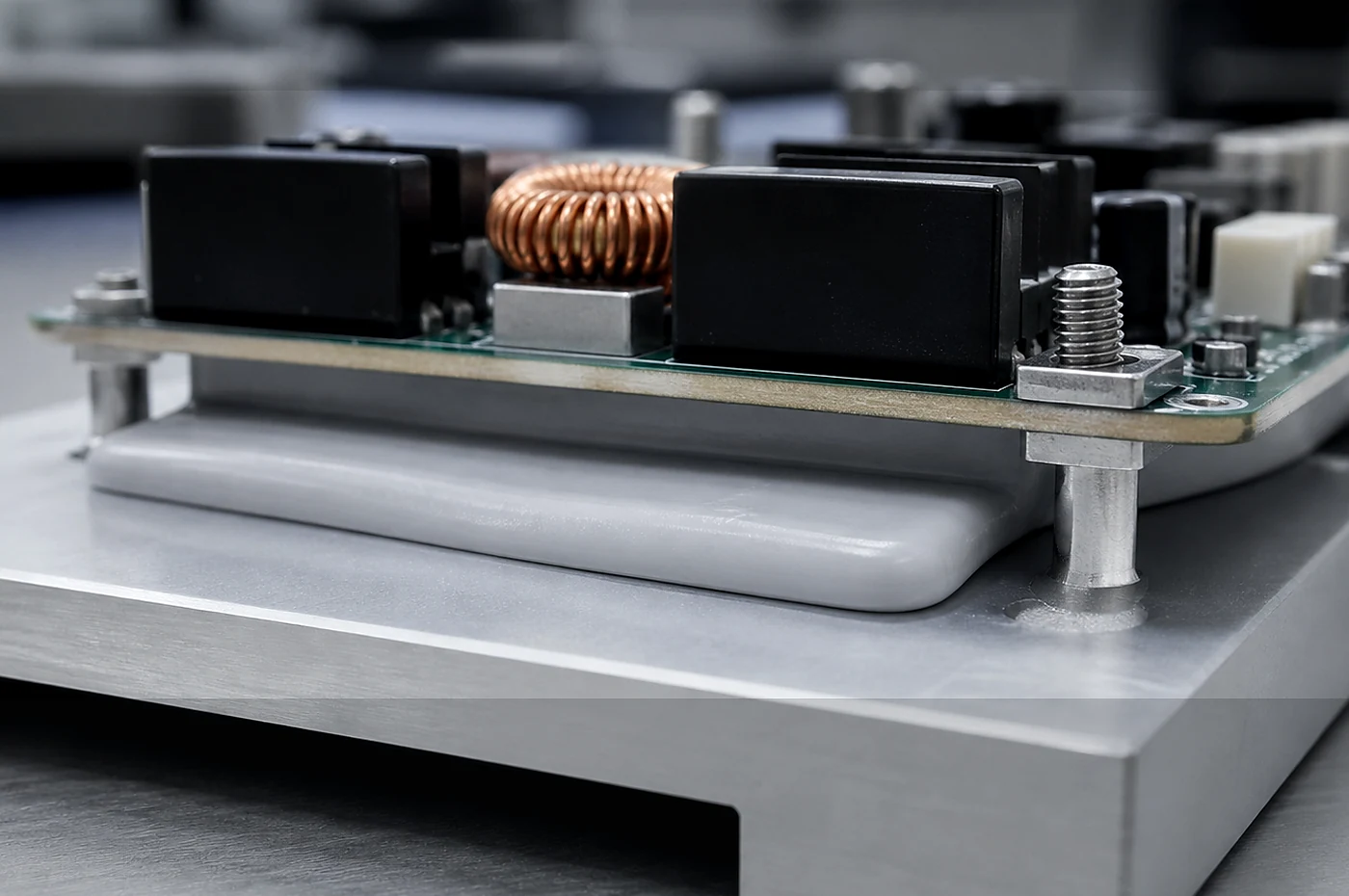
Forvard Tech links this topic to Gap Fillers, Power Module Gap Filling and the broader Thermal Silicone Materials product family.
Where gap fillers are useful
Typical applications include power electronics modules, industrial control assemblies, housings with uneven contact surfaces, potted or semi-enclosed devices and designs where the actual installed gap varies from unit to unit.
The goal is not only to place a material in the clearance. The project must consider compression, contact area, heat path, electrical or insulation needs, production handling and how the customer will validate the assembly.
Thickness, compression and fit
- Minimum and maximum gap range.
- Target compressed thickness after assembly.
- Allowed pressure or compression limit for nearby components.
- Surface flatness, tolerance stack-up and installation method.
Thermal path and validation
Gap filler performance depends on the full thermal path: heat source, contact surfaces, pressure, thickness and validation method. Buyers should avoid requesting a generic material value without explaining the assembly condition.
The Testing and Quality Control page explains how project-level inspection and testing are handled. Test methods, records and documentation are discussed per project rather than promised as a site-wide default.
RFQ checklist
- Application and device type.
- Drawing, stack-up section or sample photos.
- Gap range, target thickness and compression condition.
- Thermal, insulation or environmental target.
- Quantity stage: prototype, pilot or production.
- Destination country or region and any document expectations.
Gap filler inquiries are reviewed before quotation. Thermal values, delivery timing, availability, document scope and application acceptance are confirmed only after project review.