
Custom sealing geometry and compression review
Silicone gasket work starts with the sealing line: profile shape, compression range, groove condition, media contact and inspection points decide whether a cut, extruded or molded route makes sense.
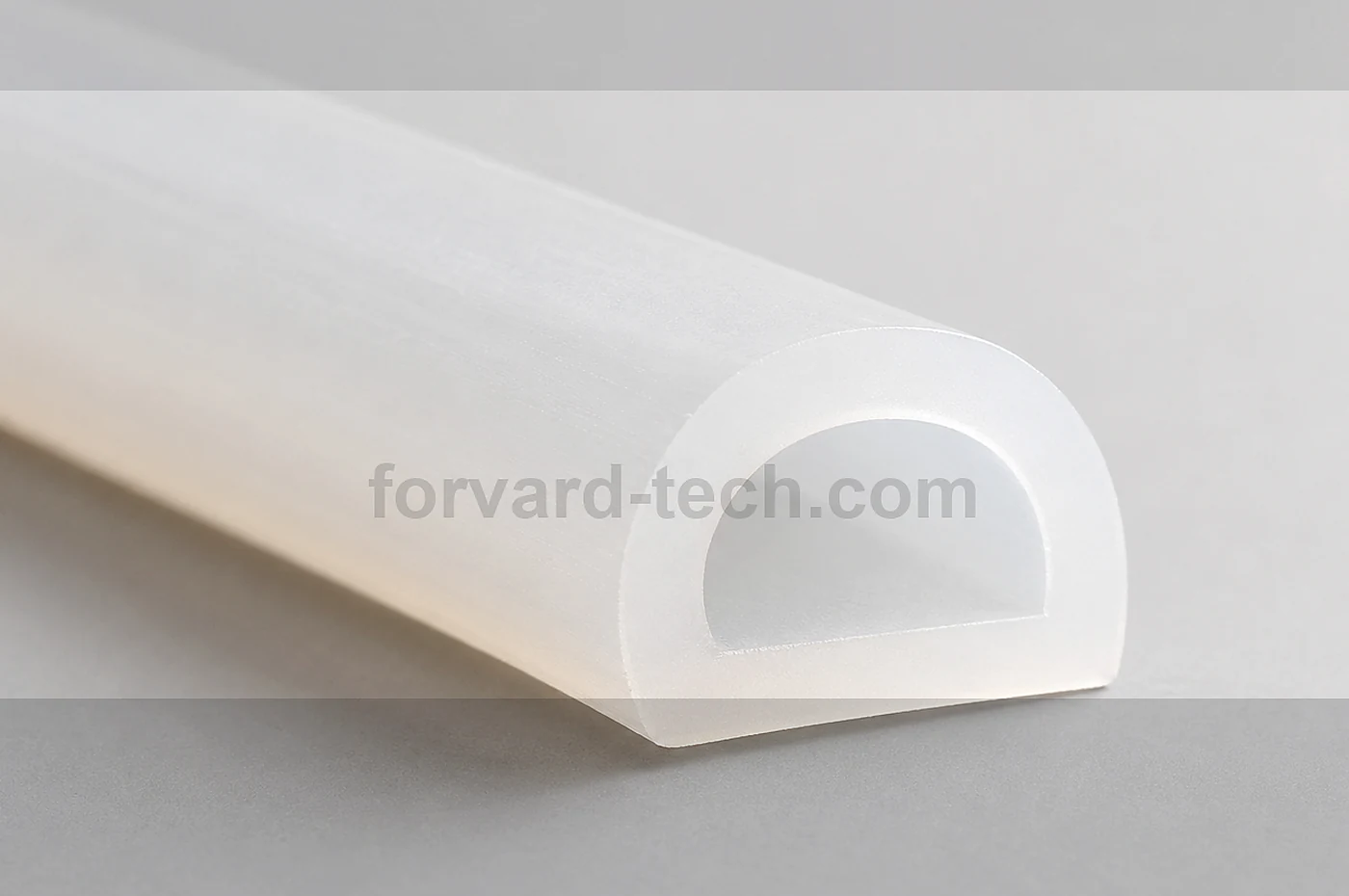
Product Fit
For sealing projects that require defined geometry, groove fit, and application conditions rather than general silicone material selection.
Sealing surface
Groove, flange, cover and housing conditions set the compression range and shape tolerance needed for the gasket.
Profile or flat form
The route can be flat die-cut, extruded profile, spliced frame or molded part depending on geometry and quantity.
Media and environment
Temperature, liquid, vapor, dust or cleaning exposure should be stated before material and hardness are selected.
Engineering Review Inputs
A gasket RFQ is clearest when the sealing interface and compression target are visible.
- 2D drawing, cross-section, groove detail or sample photo with dimensions
- Hardness target, color requirement and material family if already known
- Compression percentage, assembled height or gland condition
- Contact media, temperature range, cleaning condition and expected environment
- Production route preference: die-cut, extruded, spliced or molded
- Inspection dimensions, packaging requirement and annual quantity estimate
Manufacturing Route
Gasket manufacturing is selected from the sealing geometry first: flat cutting, extrusion, splicing and molding each create different tolerance and tooling questions.
Die-cut gasket
Flat seals work when sheet material, thickness and outline tolerance fit the housing design.
Extruded or spliced profile
Continuous cross-sections and frame seals need review of profile stability, cut length and joining method.
Molded gasket
Three-dimensional geometry, bosses, lips or complex corners may need tooling and parting-line review.
DFM / Tolerance Review
- Cross-section drawings should show critical sealing lips and non-critical reference dimensions separately.
- If the gasket sits in a groove, groove depth and assembled compression need to be checked together.
- For frames, corner radius, joint position and package deformation should be agreed before production.
Testing / QC Boundaries
- Dimensional inspection can focus on cross-section, thickness, ID/OD or assembled critical dimensions.
- Compression set or aging checks require a stated method, temperature and time condition.
- Any food, chemical or market document request is reviewed by material, batch and destination scope.
RFQ Parameters
For gasket projects, a cross-section, sealing interface and compression target are more useful than a general request for silicone rubber parts.
Gasket requirements are reviewed by geometry, material, media exposure, batch and destination; documents and tests are handled only within the agreed project scope.
- Gasket drawing or physical sample reference
- Cross-section and sealing interface
- Compression target
- Media and temperature condition
- Production route and quantity stage
Related Products
These related pages help when the sealing design becomes an extrusion, molded part or long-term compression-set question.