
Equipment contact, cleaning and document-scope review
Food and beverage equipment projects need careful scope control: the part geometry, contact media, cleaning condition and target market decide what material and documents can be reviewed.
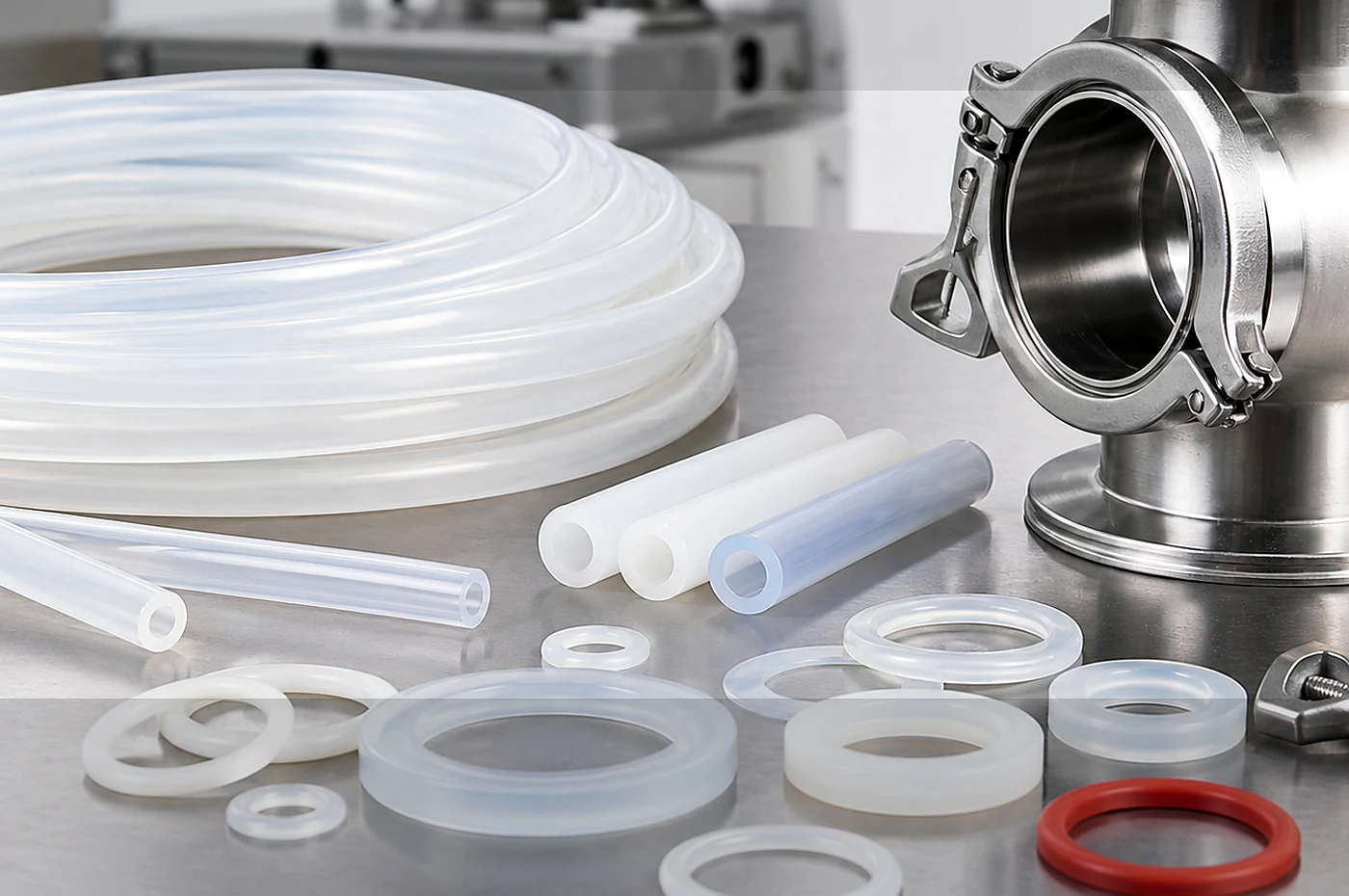
Product Fit
For equipment tubing, seals, or flexible silicone parts where contact condition, cleaning method, and documentation scope need review.
Equipment interface
Tubing, gaskets and sleeves should be tied to the actual machine position rather than described as generic food-grade silicone.
Cleaning exposure
Hot water, steam, detergent, alcohol or repeated wash cycles need to be stated before material review.
Document scope
Any document request must be linked to material, batch, target market and customer acceptance route.
Engineering Review Inputs
A responsible RFQ separates part geometry from regulatory or customer-document expectations.
- Equipment type and part position inside the machine
- Tubing ID/OD/wall or seal drawing and critical dimensions
- Contact media, cleaning method and operating temperature
- Target market and requested document type if already known
- Color, transparency, hardness and surface finish requirement
- Quantity stage, packing cleanliness and labeling expectations
Manufacturing Route
Equipment-contact parts require dimension control and clean handling without turning every project into a blanket certification claim.
Tubing or seal route
The part may be reviewed as tubing, cut sleeve, gasket, profile or molded part depending on equipment geometry.
Clean packing
Bagging, caps, separators and labels are selected according to contact sensitivity and assembly workflow.
Document review
Material and batch documents are checked against the requested destination and customer acceptance route.
DFM / Tolerance Review
- Avoid writing only food-grade; state the actual contact media and target market.
- Mark dimensions that control equipment fit separately from reference dimensions.
- Cleaning method and temperature should be stated before material screening.
Testing / QC Boundaries
- Dimensional and visual inspection follows the tubing or seal drawing.
- Cleanliness and packing checks can be added when equipment assembly requires them.
- Food-contact or market documents are not promised globally; they are reviewed by project, material, batch and destination.
RFQ Parameters
For equipment-contact tubing or seals, send geometry, contact media and document expectations together.
Food and beverage equipment review remains tied to project scope, customer acceptance route and destination market; the page does not promise universal FDA, LFGB or similar coverage.
- Equipment position and part drawing
- Contact media and cleaning method
- Temperature and operating condition
- Requested document scope
- Packing cleanliness and quantity stage
Related Products
These links help when the project separates into ordinary tubing, gasket geometry or compliance-scope review.