
Industrial buyers often search for “silicone gaskets” and “silicone seals” as if they were interchangeable. In real projects, a gasket or seal only works reliably when its geometry, compression, mating surfaces, media exposure, and validation plan are aligned. If any one of those is missing in the RFQ, you usually get long back-and-forth emails, ambiguous quotes, or parts that “look right” but fail early in assembly.
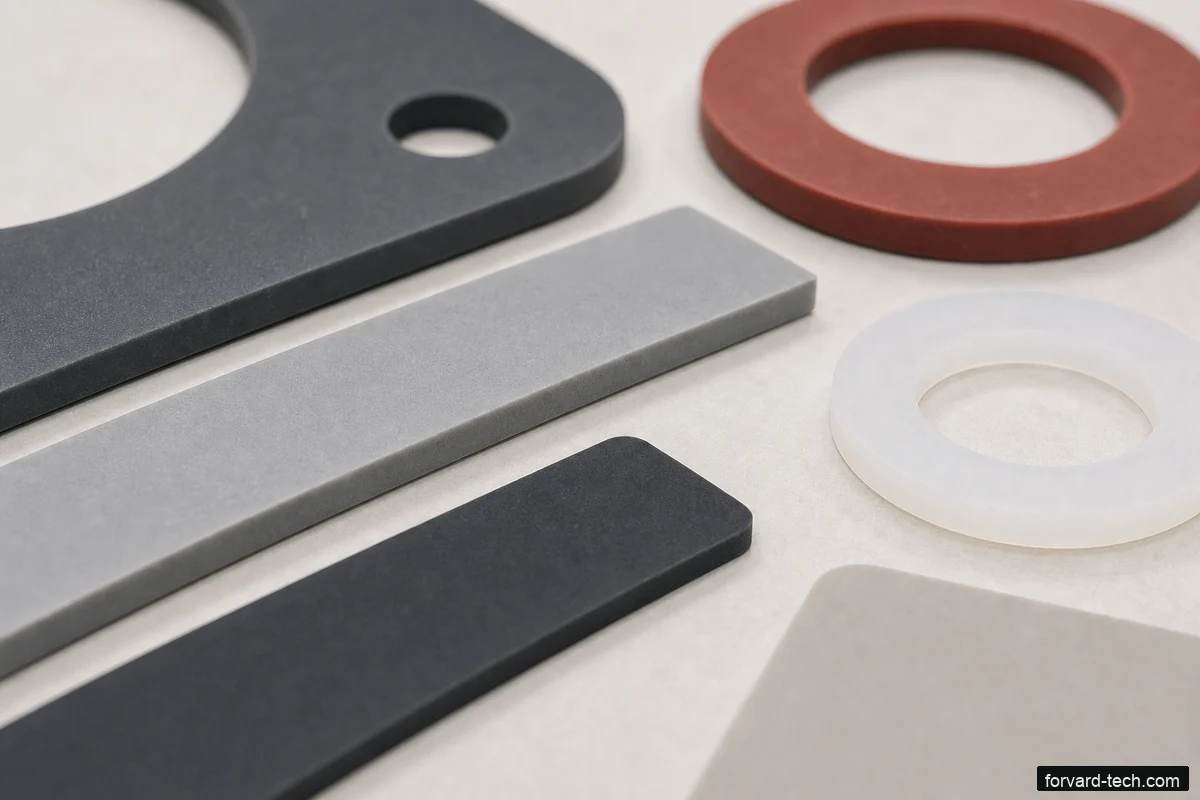
This guide is written for engineering and procurement teams that need a clear, non-overclaiming RFQ checklist for custom silicone gaskets and equipment seals.
1) Start with the part type (because “gasket” can mean many things)
Before material discussions, confirm what you are actually buying:
- Flat gasket / sheet-cut gasket: die-cut or waterjet from silicone sheet; good for simple flanges and fast revisions.
- Profile gasket / strip gasket: extruded profile (often then cut to length, spliced, or joined); common for doors, covers, cabinets, and enclosures.
- O-ring style seal: standard or custom cross-section; typically requires tight control of gland design and compression.
- Molded seal / custom molded part: better for complex geometry, integrated features, or repeatable assembly—usually involves tooling and sampling.
If you are still deciding which direction fits best, these pages help frame what each family is optimized for:
2) Describe the sealing environment (media + temperature + cleaning)
“Outdoor” or “industrial” is not a usable requirement. A gasket can face very different risks depending on what it contacts and how it is cleaned.
In your RFQ, state:
- Media exposure: air, water, steam, oils, mild chemicals, detergents, or process fluids (use your real names; avoid vague “chemical resistant” claims).
- Temperature profile: normal operating temperature, peaks, and cycling (e.g., daily heating/cooling, shutdown wash cycles).
- Cleaning method: manual wipe-down, spray, CIP-like cleaning, alkaline/acid wash, or sterilization steps (if applicable).
- Contact mode: continuous contact, intermittent splash, or only external exposure.
If the project has compliance constraints (destination, end-use screening, restricted applications), align early with the site’s compliance boundary:
3) Specify compression and gland context (don’t ask for “a perfect silicone”)
Most gasket failures are not “bad silicone”—they are mismatch between gasket design and compression:
- How much compression does the assembly produce (target range, not one magic number)?
- Is the seal static or does it see movement, vibration, or repeated opening/closing?
- Are there fasteners (bolt pattern) or a clamp that sets compression?
- Are there features that prevent extrusion or over-compression?
If long-term compression stability is a key concern, treat it as a project requirement with agreed test conditions rather than a single brochure comparison. This page explains why “compression set” needs context:
4) Tolerances: define what is critical (and why)
When buyers say “tight tolerance,” the follow-up question is always: which dimension controls assembly or leakage risk?
For gaskets and seals, typical critical items include:
- Thickness (drives compression and bolt load distribution)
- Cross-section geometry (for profiles and custom seals)
- ID/OD or groove-fit dimensions (for ring seals)
- Flatness, splice/joint geometry, and cut accuracy (for strips and joined loops)
- Mating surface expectations on the hardware (often overlooked)
If you can’t provide a formal drawing, a clear sketch plus photos of the mating surfaces and a marked-up “critical dimensions” list is still workable.
5) Material selection: treat it as a controlled choice, not a blanket promise
“Silicone” covers many formulations and processing routes. The responsible approach is:
- Start from use conditions and part geometry.
- Confirm any document needs for your specific project and destination market.
- Validate with samples and an agreed acceptance plan.
Avoid requirements that force uncontrolled overclaiming (for example: “must pass all certifications” or “must withstand any chemical”). A responsible supplier will request your exact conditions, then propose candidates and a validation approach.
6) What to send with your RFQ (so you get a meaningful quote fast)
Use this as a practical checklist. The more of this you include, the fewer iteration cycles you usually need:
- Part type: sheet gasket, extruded profile, molded seal, ring seal, etc.
- Drawing or geometry: CAD/PDF, cross-section for profiles, bolt pattern for flanges, groove dimensions if it’s a glanded seal.
- Quantity stage: prototype, pilot, or production (and expected annual volume if known).
- Operating environment: media exposure, temperature profile, cleaning method.
- Compression context: target compression range, assembly method, hardware constraints.
- Critical tolerances: which dimensions are truly critical and why.
- Validation expectations: what you will check on incoming inspection; what test evidence is needed (if any) and under what conditions.
- Destination and end-use statement: enough to pass compliance screening without sensitive detail.
Forvard Tech’s RFQ intake is structured around exactly these inputs:
7) A simple workflow that reduces risk
For many industrial projects, the safest process looks like this:
- RFQ + drawing review: confirm part family, sealing mode, and constraints.
- Material shortlisting: propose options tied to your actual conditions (not generic promises).
- Sampling and fit-check: verify geometry, compression behavior, and assembly stability.
- Agreed acceptance criteria: lock critical dimensions and inspection items before production.
If you want a quick starting point, send an RFQ with your drawing/sketch, a short “working conditions” paragraph, and your target timeline for sampling review. The fastest path is usually to align on the right questions first.
Next step: submit your details at https://forvard-tech.com/rfq/ and include your drawing and operating conditions.