
For industrial buyers, a molded silicone part project usually looks simple at the inquiry stage: send a drawing, ask for a quote, and wait for a sample plan. In reality, molded parts move efficiently only when the RFQ explains the part geometry, critical dimensions, assembly function, material direction, quantity stage, and validation route. When those inputs are vague, the quote often becomes a placeholder instead of a useful production discussion.
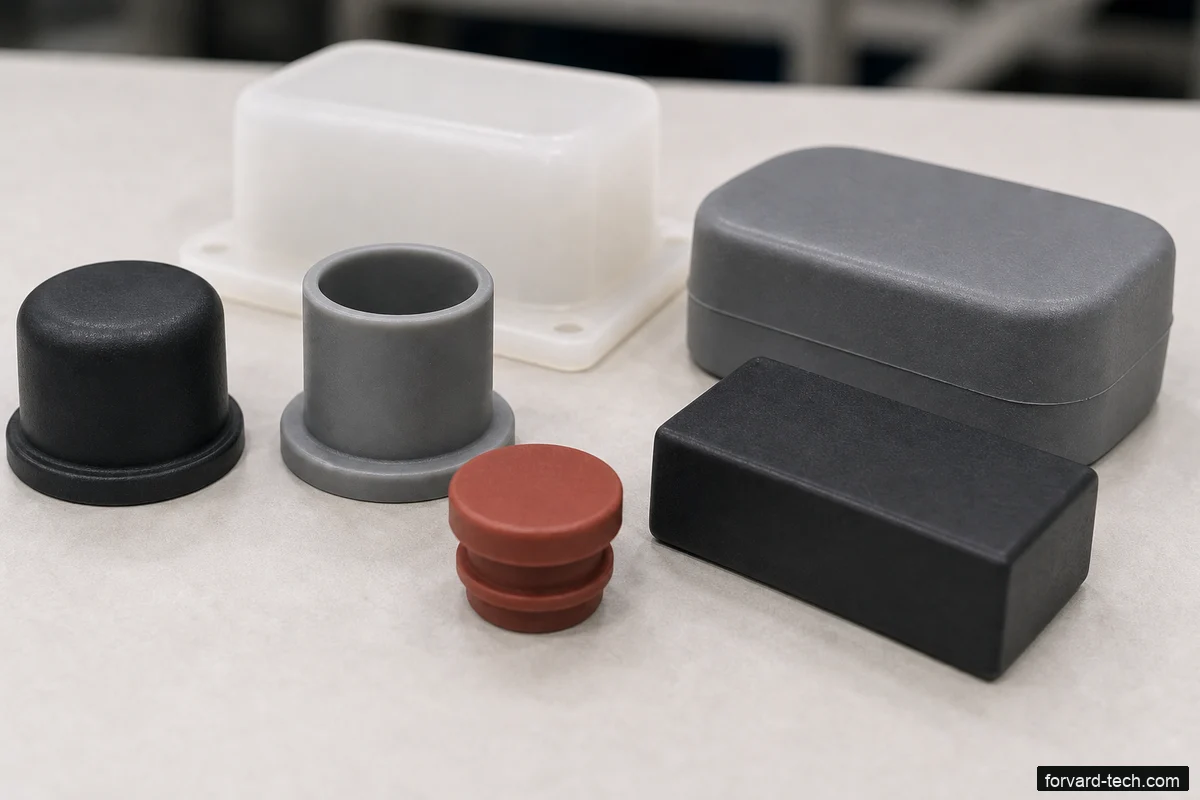
This article is written for procurement and engineering teams that need a practical checklist for molded silicone parts without sliding into uncontrolled promises on performance, timing, tooling, or approvals.
1) Start with the part definition, not just the product name
The phrase “molded silicone parts” covers many different part types: plugs, covers, seals, membranes, vibration-isolation components, custom housings, and multi-step assembly parts. Because of that range, an RFQ should begin with the actual part definition.
Useful starting inputs include:
- A 2D drawing with dimensions, units, and revision level.
- A 3D model when the geometry is complex.
- Photos or a retained sample if the project starts from an existing part.
- Notes on the application position and mating components.
If the drawing is not final, say that clearly. A preliminary drawing is still useful for feasibility review, but it should be treated as an early-stage technical discussion rather than a locked production package.
For related product context, these pages help define the broader silicone part family:
2) Explain what the part must do in the assembly
A drawing alone does not tell the full story. Two parts with similar geometry may need very different review paths depending on how they are used.
Your RFQ should explain:
- Whether the part seals, cushions, insulates, protects, or locates another component.
- Whether it works in static compression, repeated motion, snap-fit assembly, or manual handling.
- Whether the part contacts metal, plastic, glass, cable, fluid, or another elastomer.
- Whether appearance matters or function is the main priority.
This functional context helps the technical review stay grounded in the actual use case. It also reduces the risk of discussing material or tooling in the abstract, which often produces assumptions that later have to be corrected.
If end-use or destination review may matter, keep the discussion inside the site boundary here:
3) Identify the dimensions that are truly critical
One of the most common procurement mistakes is treating every dimension as equally critical. For molded parts, that usually creates unnecessary tension between the drawing and the real assembly need.
A stronger RFQ marks:
- Fit-critical dimensions that control installation.
- Seal-critical dimensions that affect compression or contact.
- Visual surfaces where flash, gate witness, or cosmetic variation may matter.
- Reference dimensions that help describe the part but do not drive acceptance.
This distinction is especially important when the part includes thin walls, undercuts, ribs, deep cavities, or mixed-thickness zones. Those features may still be feasible, but they should be reviewed with the part function in mind rather than as a generic “tight tolerance” request.
For downstream sealing behavior and long-term compression discussion, this page adds context:
4) Describe the operating environment before discussing material shortcuts
Buyers often jump straight to hardness, color, or a familiar material label. Those inputs can be useful, but they are not enough by themselves.
Include the operating environment:
- Normal temperature range, peak exposure, and cycling pattern.
- Contact media such as air, water, dust, cleaning solutions, or process-side substances.
- Whether the part is indoor, outdoor, enclosed, or exposed during maintenance.
- Whether the part is compressed once, reopened repeatedly, or assembled under load.
This keeps the material conversation tied to project conditions instead of drifting into blanket claims like “one grade fits all” or “this material covers every requirement.”
5) Treat tooling and sampling as part of the RFQ discussion
Molded silicone parts often require early clarification on how the project will move from review to sample to production. That does not mean the RFQ needs to lock every tool detail. It does mean the buyer should state the project stage clearly.
Useful RFQ notes include:
- Whether the request is for concept review, prototype sampling, pilot build, or production planning.
- Whether insert components, overmolding, or post-processing may be involved.
- Whether the part geometry is still under revision.
- Whether first-article review is needed before production release.
This lets the supplier frame the next step correctly. A prototype discussion, for example, should not be mistaken for a finished production commitment, and a production RFQ should not depend on missing design basics.
6) Clarify the inspection and validation method
The best molded part RFQs explain not only what the part looks like, but also how acceptance will be checked.
Helpful points to include:
- Which dimensions will be measured during incoming inspection.
- Whether the part is evaluated free-state, in fixture, or after assembly.
- Whether appearance standards matter for all surfaces or only visible faces.
- Whether sample approval, fit trial, or project-specific checks are expected.
That alignment matters because molded parts are rarely judged by geometry alone. Installation behavior, compression behavior, and assembly fit often matter just as much as caliper readings.
For inspection context and capability framing:
7) Include quantity stage and destination early
Commercial context matters even in a technical RFQ. A request for 50 samples is reviewed differently from a request tied to regular production demand, and a project shipping to one market may need a different document review path than a project shipping elsewhere.
At minimum, state:
- Prototype, pilot, or production quantity stage.
- Forecast range if available.
- Delivery destination country or region.
- Any project-level document review needs that must be checked before order release.
This is not about making blanket commitments. It is about keeping the RFQ realistic enough that production planning, document screening, and compliance review can happen in the right order.
8) What a strong molded silicone parts RFQ should contain
If you need a simple checklist, include these items:
- 2D drawing and, when useful, a 3D file.
- Application description showing what the part does in the assembly.
- Critical dimensions that drive fit, sealing, or movement.
- Operating conditions including temperature, media, and use cycle.
- Material preferences such as hardness, color, or other controlled specifications.
- Quantity stage for prototype, pilot, or production review.
- Validation route for sample approval, fit testing, or incoming inspection.
- Destination and end-use statement sufficient for project screening.
Forvard Tech routes molded-part inquiries through these paths:
9) Common RFQ gaps that slow molded part projects
Most delays start with one of four issues:
- The drawing describes geometry but not the function.
- Every dimension is marked critical without explaining why.
- The project asks for production discussion before the sample route is clear.
- The RFQ references documentation needs without tying them to the destination and use case.
When those gaps are fixed early, the supplier can respond with a more useful technical review and the buyer can compare options on a more disciplined basis.
Next step: send the latest drawing or sample through the RFQ page with the assembly function, critical dimensions, operating conditions, and quantity stage so the molded silicone parts review starts with usable production inputs.