
When buyers ask for silicone tubing, the first discussion often sounds simple: inside diameter, outside diameter, wall thickness, and quantity. Those basics matter, but they rarely tell the full story. Tubing projects can shift quickly depending on the media path, bend radius, cleaning routine, document review route, and whether the part will be used in general industrial equipment or in equipment that requires extra project-level file screening.
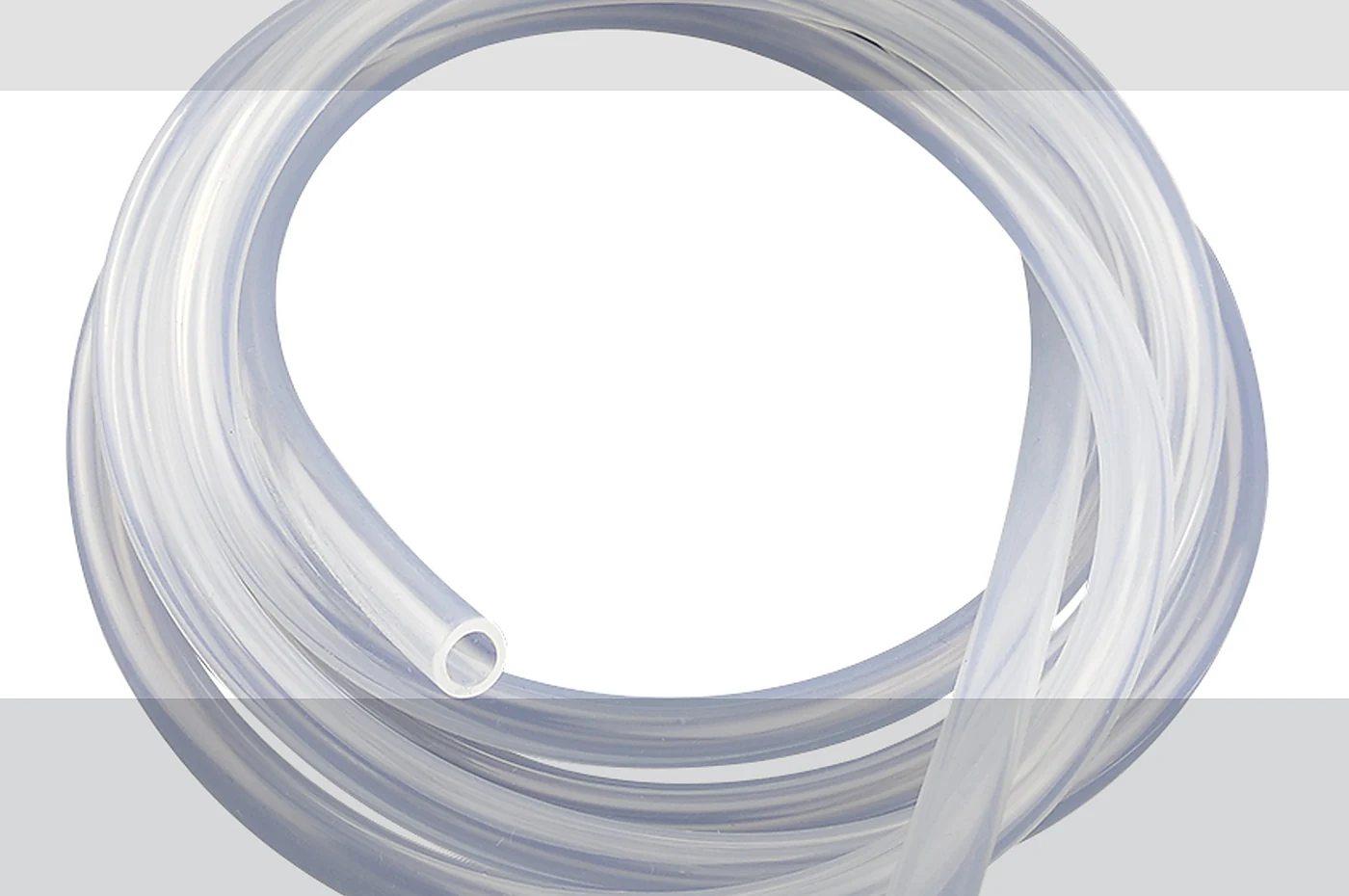
That is why a stronger RFQ does more than request “silicone tube.” It explains the real use case and the review path around it. This article outlines a practical checklist buyers can use before sending a tubing inquiry to Forvard Tech.
1) Define the tubing form before discussing material details
Many RFQs start with a material name but not the finished form. For tubing, that creates unnecessary back-and-forth because a straight extrusion, a cut length, a coil, a sleeve, and a tubing-plus-seal assembly may each need different handling.
Start by clarifying:
- Whether the request is for bulk tubing, cut-to-length pieces, formed sections, or a tubing-and-seal assembly.
- Whether the tube is used for transfer, protection, routing, insulation, or a combined sealing function.
- Whether the project is still at sample review stage or already moving toward production planning.
Forvard Tech product pages that usually help frame the discussion are:
- Industrial Silicone Tubing
- Food & Beverage Equipment Silicone Tubing and Seals
- Testing and Quality Control
If the part form is unclear, material discussion becomes too generic too early.
2) Put dimensions into the RFQ in a way production can actually use
For tubing, dimensional language should be specific enough for both extrusion review and incoming inspection planning. “About 10 mm” is not a specification. Buyers should identify the critical dimensions and indicate which ones matter most in the application.
A practical tubing RFQ should include:
- Inside diameter, outside diameter, and nominal wall thickness.
- Unit system and drawing revision.
- Straight length, coil length, or cut-length requirement.
- Any tolerance priorities if one dimension matters more than another.
- Whether the ends must remain plain, square-cut, angled, or prepared in another defined way.
If the tube mates with fittings, manifolds, pumps, or ports, say that directly. Connection method often affects how the supplier interprets dimensional risk and sample review.
3) Explain the media and operating environment
Two tubes with the same size may still be different projects if the working environment is different. Silicone tubing used in dry air routing is not reviewed the same way as tubing used around heated process lines, frequent washdown, or repeated assembly and removal.
Useful RFQ inputs include:
- What the tube carries or contacts during normal operation.
- Whether the media exposure is continuous, intermittent, or cleaning-only.
- Typical and peak temperature range.
- Whether the tube is static, flexed occasionally, or bent repeatedly in service.
- Whether the environment includes moisture, cleaning chemicals, dust, or compression at clamp points.
This does not mean the buyer must solve the material selection alone. It means the supplier receives enough context to review what information still needs confirmation.
4) Separate “food-contact discussion” from blanket public claims
Some tubing projects involve equipment used in food or beverage processing. In those cases, buyers often jump directly to broad approval language. That shortcut creates risk because document review is usually tied to the specific material, formulation, target market, application context, and project stage, not to a universal website claim.
A better RFQ states:
- The destination market or region.
- Whether the request is for early document screening, sample-stage review, or order-release review.
- Whether the tubing is part of direct product contact, adjacent process routing, or another defined equipment function.
- Whether the buyer needs the supplier to check project-specific documentation before sampling or before production release.
For public boundary language, route that discussion through:
That keeps the conversation specific and auditable without making blanket promises that may not match the final project file.
5) Identify how the tubing will be processed after extrusion
Tubing RFQs often omit downstream handling. That is a mistake because post-extrusion processing can affect review, packaging, and inspection expectations.
Add notes on:
- Whether the tubing will be supplied in coils, straight lengths, or cut pieces.
- Whether the tube will be assembled with seals, clamps, connectors, or overmolded components.
- Whether visual appearance, cleanliness, or packaging format has special handling requirements.
- Whether the project needs first-sample confirmation before the full quantity proceeds.
If your team already has a draft drawing or assembly sketch, include it. Even a preliminary document is better than asking the supplier to infer geometry from one line of text.
6) Clarify quantity stage and review timing
Procurement teams sometimes send one RFQ for sample, pilot, and production stages without saying which stage is active now. That can slow review because commercial and technical priorities are different at each stage.
State clearly whether the current request is for:
- Feasibility review only.
- Prototype or sample build.
- Pilot quantity.
- Production planning.
Also indicate any decision gate on your side, such as internal drawing freeze, customer approval, or document screening. That helps the supplier avoid treating a sample-stage inquiry like a finished production release.
7) Use a checklist that supports sample approval
Before sending a tubing RFQ, buyers should try to provide the following set of information in one package:
- Tube form and intended function.
- ID, OD, wall thickness, length format, and units.
- Drawing or section sketch.
- Media path and operating temperature range.
- Flexing, clamping, cleaning, or washdown conditions.
- Sample-stage or production-stage quantity.
- Destination market and any project-specific document review requirement.
- Packaging or cut-finish notes if they affect use.
This is usually enough to move the first review forward without forcing unsupported assumptions.
8) Keep the next step practical
The best tubing RFQ is not the one with the most marketing language. It is the one that tells the supplier what the tube does, where it fits, how it is measured, and what project review path applies.
If your team is sourcing silicone tubing for industrial equipment or equipment that needs project-level food-contact document review, send the current dimensions, media description, cleaning context, length format, destination, and review timing through the RFQ route. That creates a better starting point for material discussion, sample planning, and document screening.
Forvard Tech routes these requests through:
- Industrial Silicone Tubing
- Food & Beverage Equipment Silicone Tubing and Seals
- RFQ page
- Contact page
Next step: submit the tube dimensions, media path, cleaning or washdown notes, quantity stage, destination market, and any document-review timing so the silicone tubing discussion can stay specific from the first RFQ.