
Thermal conductive silicone is used when industrial electronics need a compliant material between heat sources, housings, modules or other surfaces. The right material choice depends on geometry, compression, assembly method and validation requirements, not on a single catalog phrase.
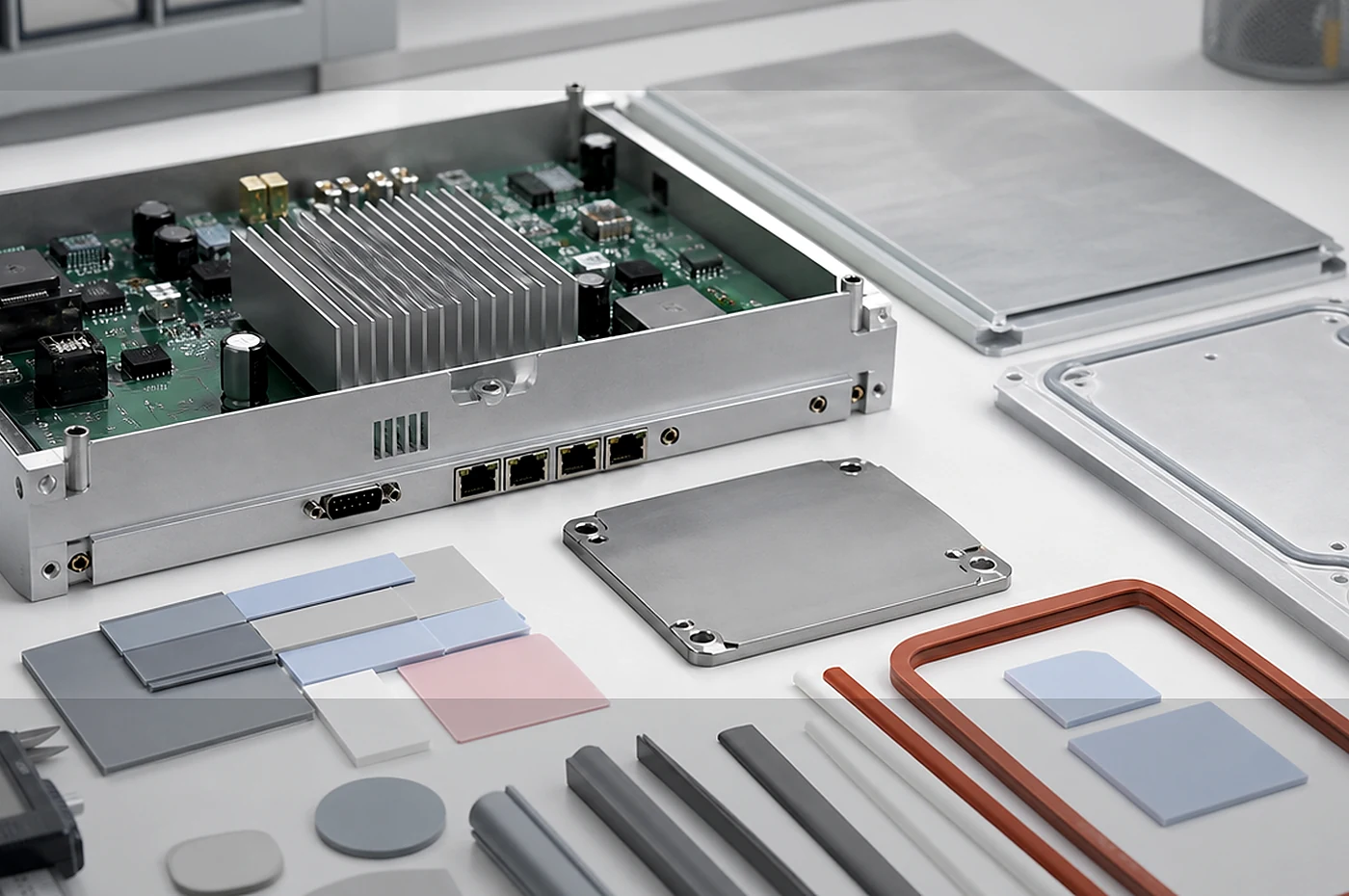
Forvard Tech handles this topic as a project review workflow. Buyers can start from Thermal Silicone Materials, then narrow the request into Thermal Pads, Gap Fillers or an application such as industrial electronics sealing and thermal management.
Where thermal conductive silicone is used
Common industrial electronics uses include enclosure heat spreading, module-to-housing contact, board-level cushioning, power device interfaces and custom pads that must fit around mechanical constraints. These projects often combine thermal transfer, insulation, compression and assembly requirements.
A useful inquiry should describe the heat path and the physical stack-up. If the material is expected to fill a clearance, absorb tolerance variation or stay compressed after assembly, that information changes the product route.
When the RFQ is still comparing sheet stock, compound selection and converted pad geometry, start from the thermal silicone materials review page before narrowing the request to a finished thermal pad.
Common product forms
- Thermal silicone pads for die-cut or custom-shaped interface parts.
- Silicone gap fillers for uneven or larger clearances.
- Custom sheets or molded silicone parts where thickness, hardness or geometry is defined by drawing.
- Electronics sealing combinations where thermal and environmental needs must be reviewed together.
RFQ parameters buyers should prepare
The most useful RFQ information is practical: drawing, target dimensions, thickness range, compression condition, heat source location, mating surface, quantity stage, destination country or region and any customer test requirement.
Website content does not create a fixed performance, price, stock, lead-time or certification commitment. Thermal material and document scope are confirmed by project, material, sample and target market.
Testing and document boundary
Thermal performance should be discussed with the intended assembly and test method. Testing and Quality Control can support project review, but every target must be confirmed against sample geometry, thickness, compression and customer validation conditions.
If RoHS, REACH, UL, FDA, LFGB or other documentation is requested, Forvard Tech reviews the request by project, material, batch and target market. The website does not state blanket coverage for every product family.